
Six artists will create nine new artworks marking the 200th anniversary of the opening of the Stockton and Darlington Railway
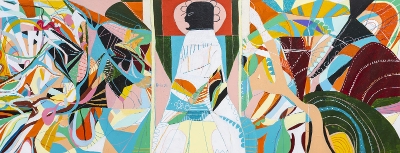
The S&DR200 festival has announced six artists who will create nine new artworks marking the 200th anniversary of the opening of the Stockton and Darlington Railway (S&DR). The project is jointly funded by Historic England and Railway Heritage Trust, marking 200 years of the railways with new artworks at key historic locations.

The series of murals will be located at iconic historic sites along the S&DR Trail of Discovery, a new trail between Witton Park in County Durham and Stockton in Tees Valley, that closely follows the original 26-mile-route of the world's first passenger and goods train journey on the S&DR. Each artist will work with local community groups, including young creatives and asylum seekers, to reflect the people and places shaped by the S&DR and reveal the hidden histories of key railway stations.
The first of the new murals along the S&DR Trail of Discovery will be unveiled on 10 June 2025, and together they will form a lasting legacy that enables future generations to discover the importance of the railway's past and present and serve as points of connection for local communities and visitors to the region.
The unveiling is organised as part of the nine-month S&DR200 festival, which launched in March and continues across County Durham and Tees Valley until November 2025, inspired by the first journey on the S&DR. The festival, which is being delivered by Darlington Borough Council, Durham County Council and Stockton-on-Tees Borough Council, will present a series of free large-scale outdoor spectacles, events, exhibitions and new art commissions in the public spaces, libraries and world-class museums.
The artists, selected by South Yorkshire-based curator David Sinclair, are Adébayo Bolaji, Kate Jackson, Morag Myerscough, Caroline Cardus, Lewis Hobson and Aida Wilde. Their new murals, nine in total, will be created alongside two existing public artworks on Stockton High Street (by Zak Newton and Allison Bentley) and the Locomotion Bridge in Shildon. These pieces are commissioned as part of the S&DR200 celebrations and have been made possible thanks to funding from Historic England, The Railway Heritage Trust and funding from The National Heritage Lottery Fund.

Highlight locations and artists include:
· Kate Jackson at the world's first railway station, the Grade II* listed Heighington and Aycliffe Railway Station. Still in use today as part of the Bishop Line (and now known as Heighington station), the station set the model for modern railway stops, providing a train halt, passenger shelter, and a hub for transporting goods.
· Adébayo Bolaji at Grade II* listed Darlington Railway Station, famously visited by Queen Victoria in 1849.
· Morag Myerscough at Stockton Station, visited by the Prince of Wales during the 1925 centenary celebrations of S&DR.
The S&DR Trail of Discovery can be explored at a variety of waymarked sections on foot, by bike or by train from stations along the route. Along the Trail, visitors will also be able to see important heritage structures, including Skerne Bridge, the oldest railway bridge still in continuous use, and the Brusselton Incline, where a section of the original Stockton and Darlington track is still visible. A new Trail of Discovery game, voiced by broadcaster Steph McGovern, will also launch in June, using augmented reality to bring the parts of the route to life.
Lord Mendoza, Chairman of Historic England, said: "These vibrant new murals will help tell the remarkable story of the Stockton and Darlington Railway, which dramatically changed the technology and transport systems of our world 200 years ago. Historic England is proud to help fund this project, bringing together artists and local communities to celebrate this extraordinary piece of our national heritage. By blending art with history along the trail, we're helping more people discover and enjoy this important story that helped shape Britain."
Festival Director Niccy Hallifax said: "It's so important that the S&DR200 festival creates a legacy and that these new murals, along with the game and public artworks, will be a visible and tangible legacy for this important year. Murals and art have always gone hand in hand with railways; street art started in the 70s as part of the New York scene and was soon picked up, so this seemed like an obvious artform to use as part of a trail of discovery. I'm delighted to work with these artists and so pleased they are working with a variety of local community groups to express this story in their own way and bring renewed attention to a series of incredible sites of historic interest."
Railway Heritage Trust Executive Director Tim Hedley-Jones said: "The Railway Heritage Trust is pleased to be working with the S&DR festival and Historic England to create these new murals along the route of this important early railway in its 200th anniversary year. Making stations relevant and vibrant places for the communities they serve is important, and this is a great way of involving local communities in achieving that."
David Sinclair, lead curator, said: "I hope this campaign shows S&DR in its current light, honouring the project for its past, present and future through these specific commissions. Offering a snapshot of its landscape and the people who make the communities what they are. This project has taught me so much about the railways, it changed my perceptions. Giving a rich experience creatively, offering an opportunity to delve into my own relationship with how I look at things. Community, creativity and pride shine through, this reflects in my curatorial approach and is something that has changed the direction of how I would like to amplify community and artistic voices."
Please find the latest S&DR200 programme listings linked here and online: www.sdr200.co.uk
Further information about the S&DR Trail of Discovery can be found here: www.sdr200.co.uk/discovery-trail
S&DR200 is part of Railway 200, a nationwide campaign celebrating 200 years of train travel. Railway 200
S&DR200 is funded by Darlington Borough Council, Durham County Council and Stockton-on-Tees Borough Council. Other major funders include Arts Council England, Tees Valley Combined Authority, North East Combined Authority, and The National Heritage Lottery Fund. Other sponsors are LNER, Hitachi Amazon UK, Caswell's, and Hampton Hilton.
From 2018 to 2023, the Stockton & Darlington railway was part of Historic England's Heritage Action Zone programme. The scheme aimed to rejuvenate and restore the historic birthplace of the modern railway system, developing its potential to deliver economic growth, social regeneration and environmental benefits, as well as securing the line's long-term management as a world-class visitor attraction.
Artists & Community Groups
Celebrated artist and designer Morag Myerscough will create a mural at Stockton train station. She was crowned as a Royal Designer for Industry (RDI) by the Royal Society of Arts (RSA) in 2017. Her mantra is 'make happy those who are near and those who are far will come,' and her work explores how colourful patterns and words can transform urban environments and people's perceptions of spaces into places. Her mural will be created in collaboration with a refugee community group and young creatives.
Multi-disciplinary artist Adébayo Bolaji will create a mural for Darlington railway station's waiting room. Bolaji's strong figurative work draws on his Nigerian (Yoruba) heritage and has been exhibited internationally, including most recently at the Norval Foundation Contemporary Art Museum in South Africa. Bolaji's work explores change and how individuals interact within societies, encompassing perspectives from religious, historical, and cultural contexts. His mural will be created with the Young Producers programme.
Caroline Cardus, an artist and activist in the Disability Arts Movement, will display The Way Ahead at the Masons Arms in Shildon. Originally launched in 2004 alongside new Disability Discrimination Act legislation, The Way Ahead remains a key Disability Art protest piece. The collaborative project invites Shildon residents to share their perspectives, which will be transformed into signage inspired by railway signals and displayed around The Mason Arms.
Visual artist, painter and former musician, Kate Jackson, will exhibit on the boards along the station's fencing at Heighington Railway Station in Newton Aycliffe, County Durham. Jackson turned to painting after years in the music industry, developing a practice rooted in architectural drawing. Her mural will be created in collaboration with the Festival's Young Producers programme.
Kate Jackson will also create a mural at Preston Park Museum and Grounds in Stockton-on-Tees, spanning the back wall of the Aviary - a much loved structure that once housed exotic birds and is now being redeveloped into an education space and seating area through the Levelling Up Fund initiative. Originally built in 1825 as part of Preston Hall's estate, the Aviary has evolved from a private residence to a public park and museum. Jackson's mural will honour 200 years of community, reflecting the connections between people and nature at the historic space.
Iranian-born printmaker and visual artist Aida Wilde will design a mural at North Road Station in Darlington. Wilde is a printmaker, visual artist, and educator whose screen-printed installations and social commentary posters have been featured on city streets around the world, offering responsive commentary on displacement, education, and equality. She will be collaborating with local asylum seekers to create her mural.
The Middleton St George footpath in County Durham will feature a piece by street artist Lewis Hobson, known for creating artwork live, showing the techniques and tools that are used by street artists. Lewis will produce a large-scale mural celebrating his own journey as an artist and that of street art as a form of expression, born out of the artworks sprayed onto the sides of subway trains in New York City and Philadelphia in the early 1970s.


